
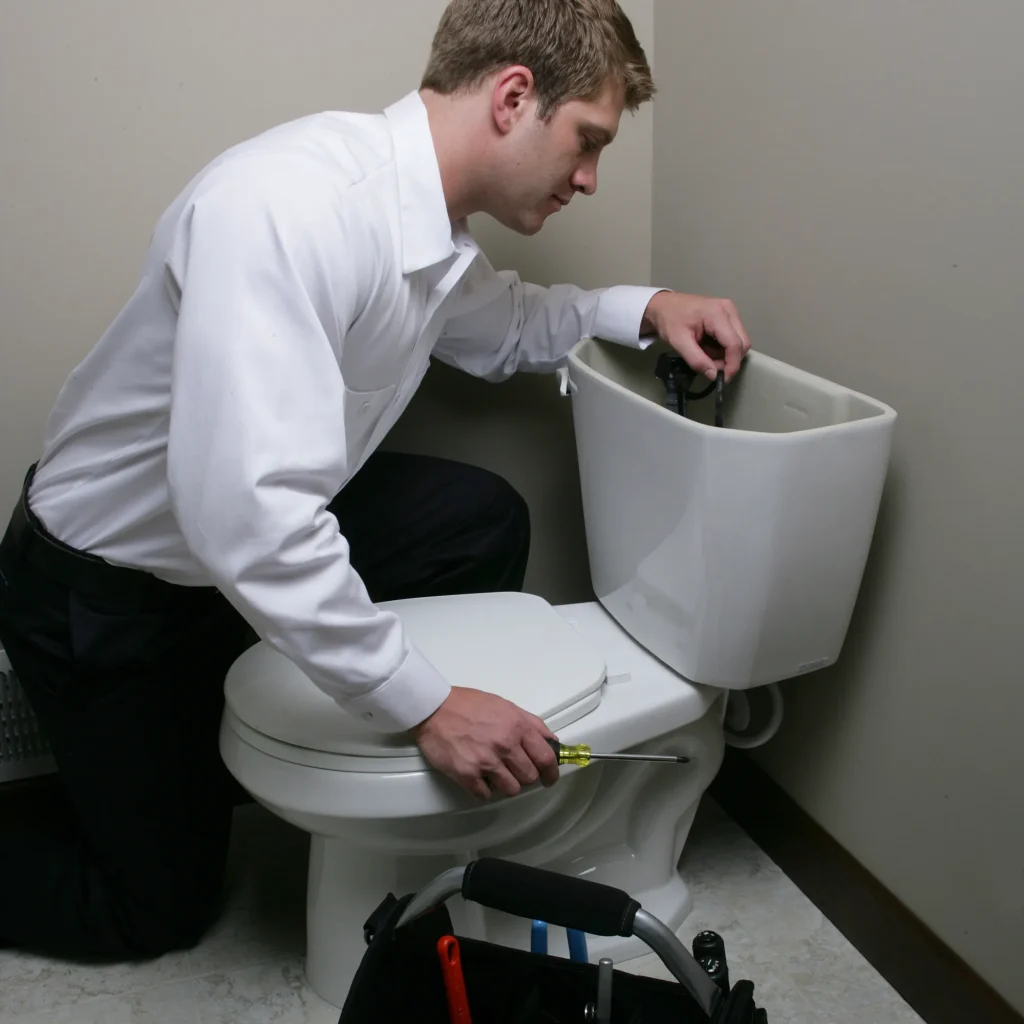
A toilet problem can go from annoying to urgent very quickly. A toilet that will not flush, a bowl that keeps filling, water around the base, or a constant running sound can disrupt your day and, in some cases, cause water damage if the problem is not handled correctly.
The good news is that many common toilet problems have clear warning signs. Knowing what to do in the first few minutes can help you prevent an overflow, avoid unnecessary damage, and decide when it is time to call a professional plumber.
What To Do First When Your Toilet Is Not Working
Before trying to fix a toilet problem, start with the basics:
- Do not flush again if the bowl is full. A second flush can push water over the rim and onto the floor.
- Know where the shutoff valve is. The toilet shutoff valve is usually located on the wall or floor behind the toilet.
- Turn off the water if the toilet is overflowing. Turn the shutoff valve clockwise until the water stops.
- Remove the tank lid carefully. If the tank keeps filling, lifting the float or pressing down on the flapper may help stop water from entering the bowl.
- Avoid chemical drain cleaners. Harsh chemicals can damage toilet components, pipes, seals, and can create a safety risk if the clog does not clear.
1. Overflowing Toilet
An overflowing toilet is one of the most stressful plumbing problems a homeowner can experience. The water rises fast, and it is not always obvious what to do next.
If the bowl starts to fill higher than normal, do not flush again. Remove the tank lid and press down on the flapper at the bottom of the tank. The flapper controls the water entering the bowl. Pressing it down can help stop more water from moving from the tank into the toilet bowl.
Next, turn off the water supply valve behind the toilet. This stops the tank from refilling and gives you time to deal with the clog.
Common causes of an overflowing toilet include:
- Too much toilet paper
- Flushed wipes, paper towels, cotton products, or hygiene products
- A toy or household object in the trap
- A partial clog deeper in the drain line
- A sewer line problem affecting more than one fixture
If the toilet overflows once and clears easily, the issue may be minor. If it happens repeatedly, drains slowly, gurgles, or backs up again after plunging, the problem may be deeper in the plumbing system.
2. Clogged Toilet Bowl
A clogged toilet is usually caused by a blockage in the toilet trap or drain line. In many cases, the clog can be cleared with a toilet plunger, but it is important to use the right technique.
Use a flange-style toilet plunger, not a flat sink plunger. The rubber flange helps create a seal inside the toilet bowl. Place the plunger over the drain opening, make sure there is enough water to cover the rubber cup, and use firm, steady pressure. Start gently, then increase force once the seal is formed.
After plunging, wait to see if the water level drops. If it does, try one careful flush. If the bowl begins to fill again, stop immediately and turn off the water supply.
Call a plumber for a clogged toilet if:
- The clog will not clear with a plunger
- The toilet clogs repeatedly
- Water backs up into a tub, shower, or floor drain
- You hear gurgling from nearby drains
- More than one toilet or drain is affected
- You suspect a child flushed a toy or object
Repeated toilet clogs are often a sign that the problem is not just in the bowl. There may be a blockage, buildup, root intrusion, or damage farther down the drain or sewer line.
3. Toilet Keeps Running
A toilet that keeps running can waste a surprising amount of water. You may hear water moving constantly, notice the toilet refilling on its own, or hear the tank cycle on and off throughout the day.
In many cases, the problem is inside the tank. The most common causes are a worn flapper, a misadjusted chain, a faulty fill valve, or a float that is set too high.
Common running toilet causes include:
- Worn flapper: The flapper no longer seals properly, allowing water to leak from the tank into the bowl.
- Loose or tangled chain: The chain may prevent the flapper from closing all the way.
- Faulty fill valve: The tank may continue trying to refill even after it reaches the proper level.
- Float set too high: Water may flow into the overflow tube instead of shutting off.
- Mineral buildup: Hard water minerals can interfere with moving parts inside the tank.
A running toilet may seem minor, but it can increase your water bill and wear out toilet components. If adjusting the chain or replacing the flapper does not solve the issue, it is time to have the toilet inspected.
4. Broken Flapper Valve
The flapper valve is a small part, but it plays a major role in how your toilet works. When you flush, the flapper lifts and allows water to move from the tank into the bowl. After the flush, it should drop back down and seal the opening.
When the flapper is cracked, warped, dirty, or worn out, water can slowly leak into the bowl. This often causes the toilet to refill on its own, even when no one has flushed it.
Signs you may need a new toilet flapper include:
- The toilet runs after flushing
- The toilet randomly refills
- The handle feels loose or must be held down
- The flush is weak or incomplete
- You see water moving in the bowl when the toilet has not been used
Replacing a flapper is a common repair, but it is important to use the correct size and style for your toilet. An improper fit can cause the same problem to continue.
5. Faulty Toilet Fill Valve Or Water Supply Valve
If you hear a constant running sound inside the tank, the fill valve may be the cause. The fill valve controls the water entering the toilet tank after each flush. Over time, sand, grit, mineral deposits, or normal wear can prevent it from shutting off properly.
In some homes around Chicagoland, older plumbing, hard water minerals, or sediment in the water supply can contribute to toilet valve issues. When the fill valve sticks or fails, the toilet may run continuously, refill slowly, or make hissing and vibrating sounds.
The shutoff valve behind the toilet can also become stiff, corroded, or unreliable with age. If you cannot turn the valve, or if it leaks when you touch it, call a plumber before forcing it. A broken shutoff valve can quickly turn a small toilet repair into a larger water problem.
6. Weak Flush Or Low Flushing Power
A weak flush can be frustrating, especially if you have to flush more than once. Low flushing power may be caused by the toilet design, a partial clog, low tank water level, mineral buildup, blocked rim jets, or worn parts inside the tank.
Older toilets used more water per flush, while many modern toilets are designed to use much less. A properly installed and well-designed modern toilet should still flush effectively, but not all toilets perform the same. If your toilet has never flushed well, the issue may be the model, installation, drain condition, or venting.
Possible causes of a weak toilet flush include:
- Low water level in the tank
- A flapper closing too quickly
- Clogged rim jets under the toilet bowl rim
- A partial clog in the toilet trap
- Mineral buildup from hard water
- Poor toilet design or improper installation
- A blocked plumbing vent
If the toilet used to flush well but has gradually become weaker, there may be buildup or a developing clog. If the toilet has always performed poorly, replacement with a better-performing toilet may be the best long-term solution.
7. Toilet Leaking Around The Base
Water around the base of the toilet should never be ignored. Sometimes it is caused by condensation or water dripping from the tank, but it can also indicate a failed wax ring, loose toilet bolts, cracked toilet, or drain connection problem.
If the wax ring under the toilet fails, wastewater can leak at the floor whenever the toilet is flushed. This can damage flooring, subflooring, and ceilings below the bathroom.
Call a plumber if you notice:
- Water pooling around the toilet base
- A sewer smell near the toilet
- The toilet rocks or shifts when used
- Staining on the floor around the toilet
- Water damage on the ceiling below the bathroom
A toilet that rocks should be repaired promptly. Movement can break the seal underneath and lead to leaks, odors, and hidden damage.
8. Toilet Handle Is Loose Or Sticking
If the toilet handle feels loose, sticks down, or has to be jiggled after flushing, there may be a problem with the handle, lift arm, chain, or flapper. While this may seem like a small annoyance, it can cause the toilet to run and waste water.
Sometimes the chain is too tight, too loose, or tangled. Other times the handle assembly is worn or corroded. A plumber can adjust or replace the parts so the toilet flushes properly and shuts off completely.
9. Toilet Makes Gurgling Sounds
Gurgling sounds from a toilet can be a warning sign of a drainage or venting problem. If the toilet bubbles when a sink, shower, washing machine, or another toilet drains, air may be trapped in the plumbing system.
This can happen when there is a partial drain clog, blocked vent, or sewer line issue. If gurgling is combined with slow drains or backups, schedule service before the problem gets worse.
10. Toilet Smells Like Sewer Gas
A sewer smell around a toilet can come from a failed wax ring, loose toilet, dry drain nearby, cracked toilet, blocked vent, or sewer line issue. Because sewer odors can indicate a sanitation problem, it is best to have the source inspected.
Do not rely on air fresheners or cleaning products to solve a persistent sewer smell. The odor may be coming from a broken seal or hidden plumbing issue that needs repair.
Should You Repair Or Replace Your Toilet?
Many toilet problems can be repaired with new internal parts, a new flapper, a new fill valve, a new handle assembly, or a new wax ring. However, replacement may be the smarter choice if the toilet is old, cracked, inefficient, uncomfortable, or frequently clogging.
Consider toilet replacement if:
- The toilet clogs often
- The porcelain is cracked
- The toilet rocks even after adjustment
- Repairs are becoming frequent
- The toilet has poor flushing performance
- You are remodeling a bathroom
- You want a comfort-height or more efficient toilet
MR Plumbing can help you decide whether repair or replacement makes more sense. Our plumbers can inspect the toilet, check the drain, explain your options, and provide up-front pricing before work begins.
Why Chicagoland Homeowners Call MR Plumbing For Toilet Repair
When a toilet is clogged, leaking, overflowing, or running constantly, you want the problem fixed correctly. MR Plumbing Heating Air Electrical is a family-owned company serving Crestwood and the Chicagoland area with professional plumbing service, up-front pricing, and 24/7 emergency availability.
Our licensed plumbers arrive prepared to diagnose the issue, protect your home, explain the repair, and complete the work with care. From simple toilet repairs to drain cleaning, sewer line concerns, bathroom plumbing, and toilet replacement, we are ready to help.
Frequently Asked Questions About Toilet Problems
Why does my toilet keep clogging?
A toilet that keeps clogging may have a partial blockage, too much paper use, flushed wipes or hygiene products, low flushing power, mineral buildup, or a deeper drain or sewer line issue. If the same toilet clogs repeatedly, it should be inspected by a plumber.
Can I use chemical drain cleaner in a clogged toilet?
It is not recommended. Chemical drain cleaners can damage toilet parts, seals, and pipes. They can also create a safety hazard if the clog does not clear and the bowl remains full.
Why does my toilet run after flushing?
A toilet that runs after flushing often has a worn flapper, faulty fill valve, misadjusted chain, or float problem. These parts are located inside the tank and can usually be repaired or replaced.
Why is my toilet leaking at the base?
A toilet leaking at the base may have a failed wax ring, loose bolts, a cracked toilet, or a drain connection problem. This should be repaired quickly to prevent floor damage and sewer odors.
When should I call a plumber for a toilet problem?
Call a plumber if the toilet overflows, clogs repeatedly, leaks, rocks, smells like sewer gas, will not flush, runs constantly, or causes backups in other drains. You should also call if plunging does not clear the clog.
Need Toilet Repair In Crestwood Or The Chicagoland Area?
Do not let a toilet problem turn into water damage, sewer odors, or a bigger plumbing repair. Whether your toilet is clogged, overflowing, leaking, running, or not flushing properly, MR Plumbing Heating Air Electrical is ready to help.
Call MR Plumbing today at 708-385-8607 for fast, professional toilet repair in Crestwood and the Chicagoland area. We offer up-front pricing, experienced plumbers, and 24/7 emergency service when you need help right away.
