
Save Money With Efficient Plumbing Fixtures
Small plumbing upgrades can make a noticeable difference in how much water your home uses every day. For many homeowners in Crestwood, Oak Forest, Midlothian, Alsip, Tinley Park, and the surrounding Chicagoland area, replacing older toilets, showerheads, faucets, and worn fixture parts is one of the simplest ways to lower water usage, reduce utility costs, and improve everyday comfort.
Efficient plumbing fixtures do more than conserve water. They can also reduce the amount of hot water your home uses, which may lower energy costs for water heating. That matters in busy households where showers, laundry, dishwashing, handwashing, and bathroom use all add up quickly.
The U.S. Environmental Protection Agency’s WaterSense program reports that WaterSense labeled products are at least 20 percent more water efficient and are independently certified to perform as well as or better than standard models. The EPA also notes that replacing old, inefficient toilets can save the average family 13,000 gallons of water and about $130 in water costs per year.
For local homeowners, the bigger point is simple: if your plumbing fixtures are outdated, leaking, constantly running, or using more water than necessary, you may be paying for water you do not need to use.
How Efficient Plumbing Fixtures Help in Older Chicagoland Homes
Many homes in the southwest suburbs were built decades ago, and even well-maintained homes can still have older toilets, faucets, shower valves, laundry connections, and water supply fixtures. In some cases, the fixtures still work, but they use far more water than newer models. In other cases, worn internal parts create hidden waste through slow leaks, running toilets, dripping faucets, or inefficient water flow.
Homes with older bathrooms, partial remodels, finished basements, multiple bathrooms, or aging water heaters may benefit the most from fixture upgrades. A toilet that runs after every flush, a showerhead that uses too much hot water, or a faucet that drips all night may seem minor, but those small problems can quietly increase your water and energy bills over time.
Mr. Plumbing, Heating, Air & Electrical has served Crestwood and the Chicagoland area since 1972, offering plumbing services that include water heaters, toilet repair and replacement, water softeners, whole-house water filtration, drain cleaning, sump pumps, sewer line repair, and related plumbing upgrades. The company also emphasizes up-front pricing, licensed technicians, 24/7 emergency service, and a local showroom in Crestwood.
Best Water-Saving Plumbing Upgrades for Your Home
If you want to reduce water waste without sacrificing comfort, start with the fixtures your family uses the most. Toilets, showers, bathroom faucets, kitchen faucets, laundry connections, and outdoor hose bibbs are all common places where water can be saved.
1. Replace Older Toilets With High-Efficiency Toilets
Toilets are one of the biggest sources of indoor water use in a home. If your toilet was installed before modern efficiency standards, it may use far more water per flush than necessary. Older toilets can also develop internal leaks that are hard to spot because the water leaks from the tank into the bowl instead of onto the floor.
Modern WaterSense labeled toilets use 1.28 gallons per flush or less while still meeting performance standards. According to the EPA, that is 20 percent less water than the current federal standard of 1.6 gallons per flush.
A new toilet may be worth considering if:
- Your toilet was installed before the mid-1990s.
- The toilet runs, refills randomly, or makes noise when no one has used it.
- You have to flush more than once on a regular basis.
- The toilet rocks, leaks around the base, or has worn internal parts.
- You are remodeling a bathroom and want a more efficient fixture.
- You want comfort-height, elongated bowl, dual-flush, or easier-to-clean options.
For many homeowners, toilet replacement is not just about saving water. It can also improve flushing performance, reduce clogs, refresh the look of a bathroom, and help prevent damage from leaks around the base or supply line.
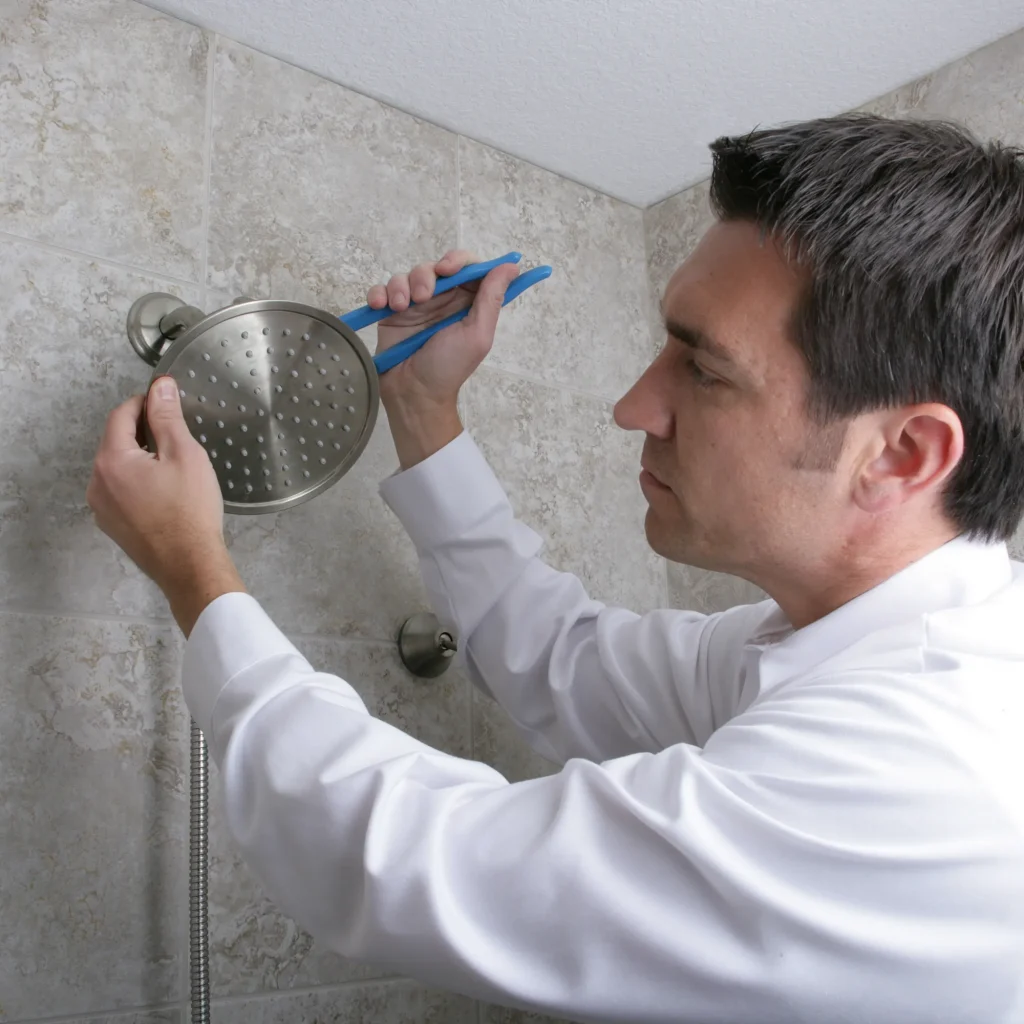
2. Install Water-Saving Showerheads
Showers use both water and energy because much of the water is heated. That means an inefficient showerhead can affect both your water bill and your energy bill.
The EPA states that standard showerheads use 2.5 gallons of water per minute, while WaterSense labeled showerheads must use no more than 2.0 gallons per minute and still provide a satisfactory shower.
A water-saving showerhead can be a smart upgrade if your shower uses too much hot water, the bathroom gets very steamy, the water heater seems to run out quickly, or your household has several people showering each day. Newer models are designed to provide a strong, comfortable spray while using less water than older fixtures.
When choosing a showerhead, look beyond the flow rate alone. Spray pattern, pressure balance, fixture quality, and compatibility with your home’s plumbing all matter. If a shower has weak pressure, inconsistent temperature, mineral buildup, or an aging shower valve, the problem may not be the showerhead itself. A professional plumber can help determine whether the fixture, valve, water pressure, or mineral buildup is causing the issue.
3. Upgrade Bathroom Faucets and Aerators
Bathroom faucets are used throughout the day for handwashing, brushing teeth, shaving, washing up, and cleaning. Replacing an older faucet or adding a new aerator can reduce water use without a major renovation.
WaterSense labeled bathroom sink faucets and faucet accessories use a maximum of 1.5 gallons per minute, which can reduce water flow by 30 percent or more compared with the standard flow of 2.2 gallons per minute, according to the EPA.
Faucet upgrades are especially useful when:
- A faucet drips after being turned off.
- The handle is loose, stiff, or difficult to control.
- Water sprays unevenly because of mineral buildup.
- The faucet is outdated or does not match a bathroom remodel.
- The shutoff valves under the sink are old, corroded, or difficult to operate.
- You want a better-looking fixture with more efficient water flow.
In many cases, installing a new aerator is a simple way to reduce water use. However, if the faucet is old, corroded, leaking at the base, or connected to aging shutoff valves, replacing the entire faucet may be the better long-term solution.
4. Fix Leaks Before They Waste More Water
Efficient fixtures help, but leaks can erase much of the savings. A dripping faucet, leaking toilet flapper, worn supply line, or slow pipe leak can waste a surprising amount of water over time.
The EPA reports that the average family can waste 180 gallons per week, or 9,400 gallons annually, from household leaks.
Common signs of plumbing leaks include:
- A toilet that runs after flushing or refills on its own.
- A faucet that continues dripping after the handle is off.
- Water stains under sinks or near fixture bases.
- Musty odors inside cabinets or near walls.
- Higher-than-normal water bills.
- Low water pressure at one fixture.
- Moisture around the toilet base, tub, shower, or laundry area.
In Chicagoland homes, it is also common to find older shutoff valves, aging supply lines, worn wax rings, and fixtures that have been patched several times over the years. Repairing these issues early can help prevent water damage, mold concerns, cabinet damage, flooring problems, and emergency plumbing calls.
5. Consider Efficient Kitchen Fixtures
The kitchen faucet is one of the hardest-working fixtures in the home. It is used for cooking, cleaning, rinsing dishes, filling pots, washing hands, and everyday cleanup. While bathroom faucets are often the first place homeowners think about water savings, the kitchen is also worth reviewing.
An efficient kitchen faucet can improve convenience while helping reduce unnecessary water use. Pull-down sprayers, better handle control, improved aerators, and quality shutoff valves can all make a kitchen more functional.
Kitchen fixture upgrades may be especially helpful if:
- The faucet leaks around the handle or base.
- The sprayer no longer retracts or sprays properly.
- The faucet is loose at the countertop.
- The water flow is uneven or restricted by mineral buildup.
- You are replacing a sink, countertop, dishwasher, or garbage disposal.
- The shutoff valves or supply lines under the sink are aging.
6. Improve Water Heater Efficiency by Reducing Hot Water Waste
Water-saving fixtures can also help your water heater work more efficiently. Every gallon of hot water used by a shower, faucet, washing machine, or dishwasher must be heated. When fixtures use more hot water than needed, the water heater has to work harder.
Efficient showerheads and faucets can be especially valuable in homes with large families, older tank water heaters, or bathrooms located far from the water heater. If your home frequently runs out of hot water, the solution may involve fixture upgrades, water heater maintenance, water heater replacement, or a review of your home’s hot water demand.
Mr. Plumbing can help homeowners evaluate conventional water heaters, tankless water heaters, fixture performance, and plumbing system issues that may be contributing to wasted hot water.
7. Do Not Ignore Water Pressure Problems
Some homeowners hesitate to install efficient fixtures because they are worried about weak water pressure. That concern is understandable, especially if you have used older low-flow products that performed poorly.
Today’s WaterSense labeled products are independently certified for both efficiency and performance. However, if your home already has poor water pressure, changing the fixture may not solve the underlying problem.
Low or inconsistent water pressure may be caused by:
- Mineral buildup inside showerheads or faucet aerators.
- Partially closed shutoff valves.
- Old galvanized piping.
- Pressure reducing valve issues.
- Water softener or filtration problems.
- Leaks in the plumbing system.
- Municipal supply pressure changes.
Before assuming the fixture is the problem, have a plumber inspect the system. In some cases, a new showerhead or faucet will help. In other cases, the real issue may be with the valve, piping, water heater, or pressure regulation.
How Much Can Efficient Plumbing Fixtures Save?
Savings depend on the age of your existing fixtures, how many people live in the home, how often the fixtures are used, local water and sewer rates, and whether the fixtures are leaking. However, EPA WaterSense data shows that fixture upgrades can produce meaningful savings over time.
| Upgrade | Potential Benefit | Best For |
|---|---|---|
| WaterSense toilet | Uses 1.28 gallons per flush or less and may save thousands of gallons per year | Older bathrooms, running toilets, remodels, frequent clogs |
| WaterSense showerhead | Uses no more than 2.0 gallons per minute while maintaining performance | Busy households, high hot water use, older showerheads |
| Bathroom faucet or aerator | Can reduce sink flow by 30 percent or more compared with standard flow | Leaking faucets, bathroom updates, daily water savings |
| Leak repairs | Helps stop hidden water waste and prevent property damage | Running toilets, dripping faucets, moisture under sinks |
| Kitchen faucet replacement | Improves function, control, appearance, and water efficiency | Kitchen remodels, leaking faucets, worn sprayers |
When Should You Repair vs. Replace a Plumbing Fixture?
Some plumbing fixtures can be repaired with a new cartridge, flapper, fill valve, aerator, supply line, or seal. Others are better replaced, especially when the fixture is old, inefficient, corroded, unreliable, or no longer worth repairing.
Repair may make sense when the fixture is newer, in good condition, and the problem is limited to one worn part. Replacement may be the better choice when the fixture is outdated, inefficient, leaking repeatedly, difficult to find parts for, or part of a larger bathroom or kitchen update.
A plumber can help you compare both options so you do not spend money repairing a fixture that is likely to keep causing problems.
Plumbing Fixture Upgrades That Add Comfort and Value
Water-saving fixtures do not have to feel like a compromise. Many homeowners upgrade fixtures for comfort, appearance, accessibility, and convenience as much as efficiency.
Popular options include:
- Comfort-height toilets.
- Dual-flush toilets.
- Elongated toilet bowls.
- Modern bathroom faucets.
- Pull-down kitchen faucets.
- Efficient showerheads with multiple spray settings.
- ADA-friendly faucet handles.
- Updated shutoff valves and supply lines.
- Water filtration and water softening options.
If you are planning a bathroom remodel, kitchen update, laundry room improvement, or fixture replacement, it is a good time to look at the plumbing behind the fixture as well. Replacing old shutoff valves, supply lines, traps, flanges, and worn connections can help protect your investment and reduce the chance of future leaks.
Local Plumbing Help in Crestwood and the Chicagoland Area
Efficient fixtures are only as reliable as their installation. A toilet that is not sealed correctly, a faucet connected to failing shutoff valves, or a shower fixture installed without addressing pressure issues can lead to frustration and costly repairs later.
Mr. Plumbing, Heating, Air & Electrical provides professional plumbing fixture repair and replacement for homeowners throughout Crestwood and the surrounding Chicagoland area. Whether you need a new toilet, a faucet replacement, a showerhead upgrade, leak repair, water heater help, or advice on the best fixture options for your home, our experienced team can help you make a smart, practical choice.
Call Mr. Plumbing for Water-Saving Fixture Upgrades
Ready to reduce water waste, improve comfort, and update the fixtures your family uses every day? Call Mr. Plumbing, Heating, Air & Electrical at 708-385-8607 to schedule plumbing service in Crestwood or the surrounding Chicagoland area.
From toilet replacement and faucet upgrades to leak repairs, water heaters, water filtration, and whole-home plumbing improvements, our team is here to help with up-front pricing, experienced technicians, and service you can trust.
