
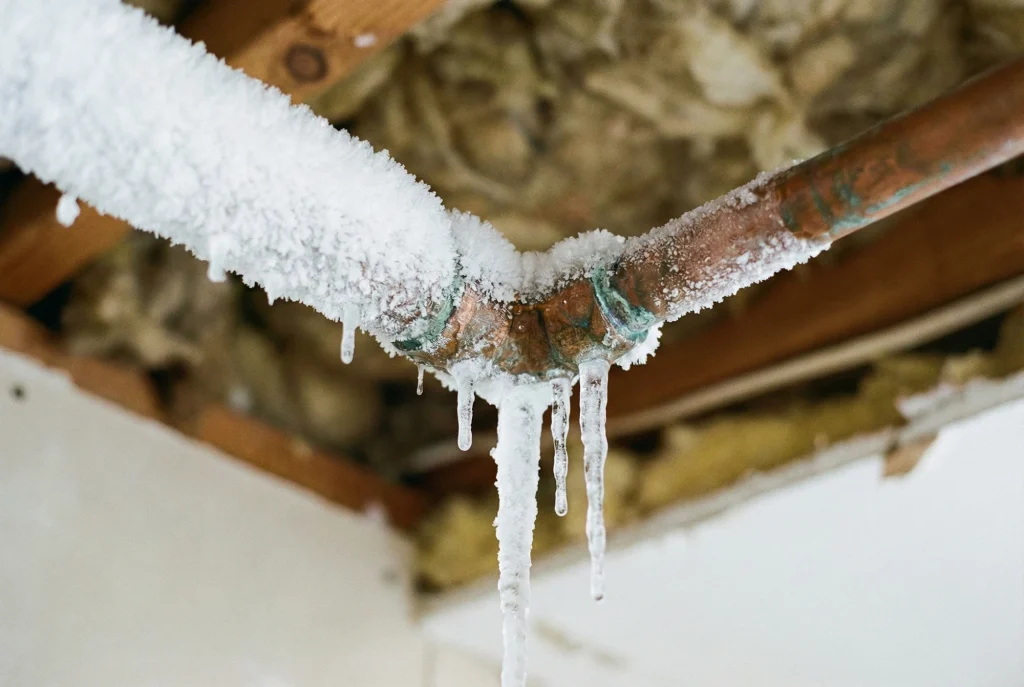
As winter settles into the Chicagoland area, frozen pipes quickly become one of the most common, and costly, plumbing emergencies homeowners face. When water freezes, it expands inside the pipe, increasing pressure until the pipe ruptures. A single burst pipe can unleash gallons of water into your home within minutes, leading to structural damage, mold growth, and expensive repairs.
With decades of experience serving Crestwood and the greater Chicagoland, Mr. Plumbing has seen firsthand how quickly frozen pipes can escalate into an emergency. Our team of expert plumbers share the proactive steps every homeowner should take, along with the safest actions to follow if you discover a frozen pipe in your home this winter.
Preventative Measures to Avoid Frozen Pipes
Seal Exterior Walls and Insulate Exposed Pipes
Pipes that run along exterior walls or through unheated areas are at the highest risk of freezing. Inspect basements, crawl spaces, garages, attics, and utility rooms for gaps or cracks that allow cold air to enter. Seal openings with caulk or expanding foam. Then insulate exposed pipes using foam sleeves, fiberglass wrap, or, for higher-risk areas, UL-approved heat tape.
Maintain a Consistent Indoor Temperature
Even if you’re away or trying to cut energy costs, never allow your home’s temperature to fall below 55°F. A warm, stable indoor environment greatly reduces the risk of interior pipes freezing—especially in older homes with less insulation.
Eliminate Drafts Around Plumbing
Cold air often enters through small openings behind appliances, under sinks, and where pipes exit the home. Caulking, weather stripping, or insulating foam can significantly reduce airflow and keep temperatures stable around vulnerable pipes.
Allow Faucets to Drip During Extreme Cold
When Chicagoland temperatures fall into the single digits or below zero, let faucets connected to high-risk pipes drip slowly. Moving water is far less likely to freeze. Even a light trickle can relieve pressure in the line and protect against a rupture.
Open Cabinet Doors Under Sinks
Under-sink plumbing located on exterior walls is especially prone to freezing. Opening cabinet doors allows warm household air to circulate around the plumbing, helping prevent icy conditions.
Upgrade to a Smart Thermostat for Added Protection
A smart thermostat helps maintain a consistent indoor temperature, which is critical for preventing frozen pipes during severe cold spells. Many models can send alerts if your home temperature drops unexpectedly, signaling potential furnace failure or increased frozen-pipe risk. This early warning lets you act before a pipe freezes and bursts.
What to Do If Your Pipes Freeze
Turn Off the Water Immediately
If you suspect a pipe has frozen, locate your main water shut-off valve and turn it off right away. This reduces pressure inside the pipe and minimizes damage if the pipe cracks or leaks during the thawing process. If you’re unsure where the valve is, identify it now—before an emergency happens.
Apply Gentle Heat to the Frozen Area
Use a hair dryer, heating pad, or warm towels to thaw a frozen section of pipe slowly and safely. Begin warming the pipe near the faucet and work your way toward the frozen area. Never use an open flame—propane torches and candles pose a serious fire risk and can damage the pipe.
Know When to Call a Professional Plumber
Some frozen pipes are buried behind walls, located in crawl spaces, or simply too dangerous for DIY thawing. If you cannot locate the frozen section, if the pipe is inaccessible, or if the pipe has burst, call a licensed plumber immediately.
Mr. Plumbing offers 24/7 emergency service, providing fast, professional frozen and leaking pipe repair. Our background-checked technicians arrive in uniform, fully equipped, and trained to handle frozen-pipe situations safely and efficiently.
Inspect Other Pipes for Freezing
If one pipe freezes, others may be close behind. After resolving the initial issue, check additional fixtures for low water pressure, slow flow, or unusual noises in the walls—clear signs of developing ice blockages.
Long-Term Strategies to Prevent Future Pipe Freezing
Improve Home Insulation
Upgrading attic, basement, and wall insulation not only protects pipes but also improves overall energy efficiency, especially important during Chicagoland winters.
Install Shut-Off Valves for High-Risk Areas
Strategically placed shut-off valves make it easier to isolate vulnerable plumbing lines when temperatures plunge, reducing the risk of widespread damage.
Consider Professional Pipe Rerouting
Older homes often have plumbing lines running through cold, under-insulated areas. Rerouting exposed pipes to safer interior locations can eliminate freeze risks permanently.
Protect Your Home This Winter with Mr. Plumbing
Frozen pipes are more than an inconvenience, they can quickly become one of the most expensive plumbing problems a homeowner faces. By taking proactive steps now, you can significantly reduce the risk of a burst pipe and protect your home from major water damage.
And if a pipe does freeze or burst, Mr. Plumbing is here to help. With expertise since 1972, transparent up-front pricing, and 24/7 emergency service, we provide the trusted plumbing solutions Chicagoland families rely on.
Need immediate frozen pipe help? Contact us or Call our team anytime. We’re here when you need us.
